
Fly Lines


Guideline Brook WF
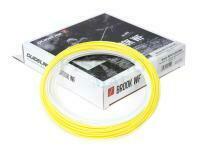

Guideline Brook WF is a floating WF fly line designed for sm...
Prices from
51.93 €
Guideline Highwater Classic WF
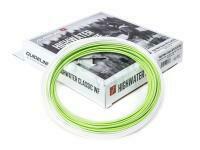
Guideline Highwater Classic WF is a range of floating WF fly...
Prices from
51.93 €
Guideline 4 Cast+ WF
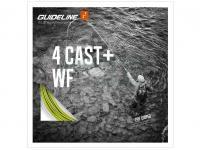
Guideline 4 Cast+ WF is a versatile floating fly line with a...
Prices from
55.56 €
Guideline LPS / Euro WF
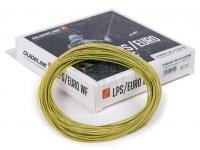
Guideline LPS / Euro WF is a floating 2-in-1 fly line design...
Prices from
53.14 €
Guideline Presentation+ WF
Guideline Presentation+ WF is a floating Weight Forward fly...
Prices from
61.59 €
Cortland Trout Series Indicator
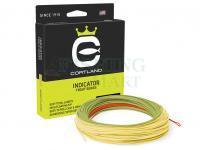
Cortland Trout Series Indicator are floating WF fly lines de...
Prices from
71.50 €
Guideline Predator Evolve
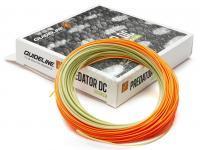
Guideline Predator Evolve is a series of fly lines developed...
Prices from
72.22 €
Cortland Ultralight Trout Series Floating

Cortland Ultralight Trout Series are floating WF fly lines d...
Prices from
109.95 €
Cortland Streamer Floating
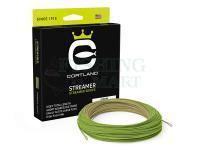
Cortland Streamer Floating are floating WF fly lines designe...
Prices from
99.95 €
Cortland Finesse Trout II Floating
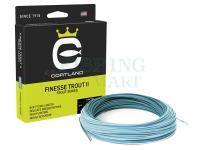
Cortland Finesse Trout II Floating are floating WF fly lines...
Prices from
99.95 €
Floating, Sinking & Intermediate Fly Lines
Fly lines are a very important part of the fly fishing set and you can safely say that when fishing for smaller trout, grayling, the fly line is more important than the reel.
It is with the help of a fly line (which is also commonly called fly lines) having its weight and the right shape that we can use a fly rod to send an artificial fly to the required distance.
The fly lines are selected for the rod and the reel according to the AFTM class and it must always be a complete set, failure to adapt the line to the rod will result in e.g. poor casting properties of the set, or the possibility of breaking the fly rod due to its overload.
Secondly, we can divide them in terms of displacement, and here we distinguish floating and sinking lines. The sinking versions can be divided into sinking speeds, from very slowly sinking intermediate types, which are carried out practically under the very surface (great lines for a wet fly and streamer for fisheries with flowing water, as well as for shallow rivers), to those very fast sinking, e.g. large rivers with raised water - incl. class 6 sinking lines for the Dunajec River.
Fly lines can also be divided according to their shape, the cylindrical lines that started it all, which were forgotten until recently, have returned to favor and are now available to competitors as legal links to competition nymph methods.
The next lines are DT-shaped - that is, the line is tapered on both sides and cylindrical in the middle. DT lines are recommended for a more delicate presentation of a dry fly, nymph or wet fly at shorter distances, because this type of lines does not cast far.
The most popular fly lines today are WF lines and these lines are the farthest. They have a thickened front part of the line (about the first 9 meters) and later have a thin cylindrical long section. Thanks to this shape, when casting, it feels like the front part is pulling the rest. WF lines are recommended wherever you need to throw further.
Of course, there are other types of lines, but the most important ones are described above.
If you have any questions, please contact us.
It is with the help of a fly line (which is also commonly called fly lines) having its weight and the right shape that we can use a fly rod to send an artificial fly to the required distance.
The fly lines are selected for the rod and the reel according to the AFTM class and it must always be a complete set, failure to adapt the line to the rod will result in e.g. poor casting properties of the set, or the possibility of breaking the fly rod due to its overload.
Secondly, we can divide them in terms of displacement, and here we distinguish floating and sinking lines. The sinking versions can be divided into sinking speeds, from very slowly sinking intermediate types, which are carried out practically under the very surface (great lines for a wet fly and streamer for fisheries with flowing water, as well as for shallow rivers), to those very fast sinking, e.g. large rivers with raised water - incl. class 6 sinking lines for the Dunajec River.
Fly lines can also be divided according to their shape, the cylindrical lines that started it all, which were forgotten until recently, have returned to favor and are now available to competitors as legal links to competition nymph methods.
The next lines are DT-shaped - that is, the line is tapered on both sides and cylindrical in the middle. DT lines are recommended for a more delicate presentation of a dry fly, nymph or wet fly at shorter distances, because this type of lines does not cast far.
The most popular fly lines today are WF lines and these lines are the farthest. They have a thickened front part of the line (about the first 9 meters) and later have a thin cylindrical long section. Thanks to this shape, when casting, it feels like the front part is pulling the rest. WF lines are recommended wherever you need to throw further.
Of course, there are other types of lines, but the most important ones are described above.
If you have any questions, please contact us.
